
CASE STUDY
Adding the Power of AI to LinkedIn Job Search
Helping users find the right job.
Context
How Do People Search on LinkedIn Now?
There are two types of users on LinkedIn:
Type 1: Basic Searchers
Enter job title → Apply filters → Manually scroll through irrelevant listings → Leave after 1–2 pages out of frustration.
Type 2: Power Users
Use Boolean queries like "Product Manager" AND "Entry-level" → Still find postings requiring 5+ years of experience → Leave out of frustration.

Observation: Users are adapting to LinkedIn's limitations, not the other way around.
How Do People Search for Jobs Today?
In today's world, job seekers use different channels to find jobs:
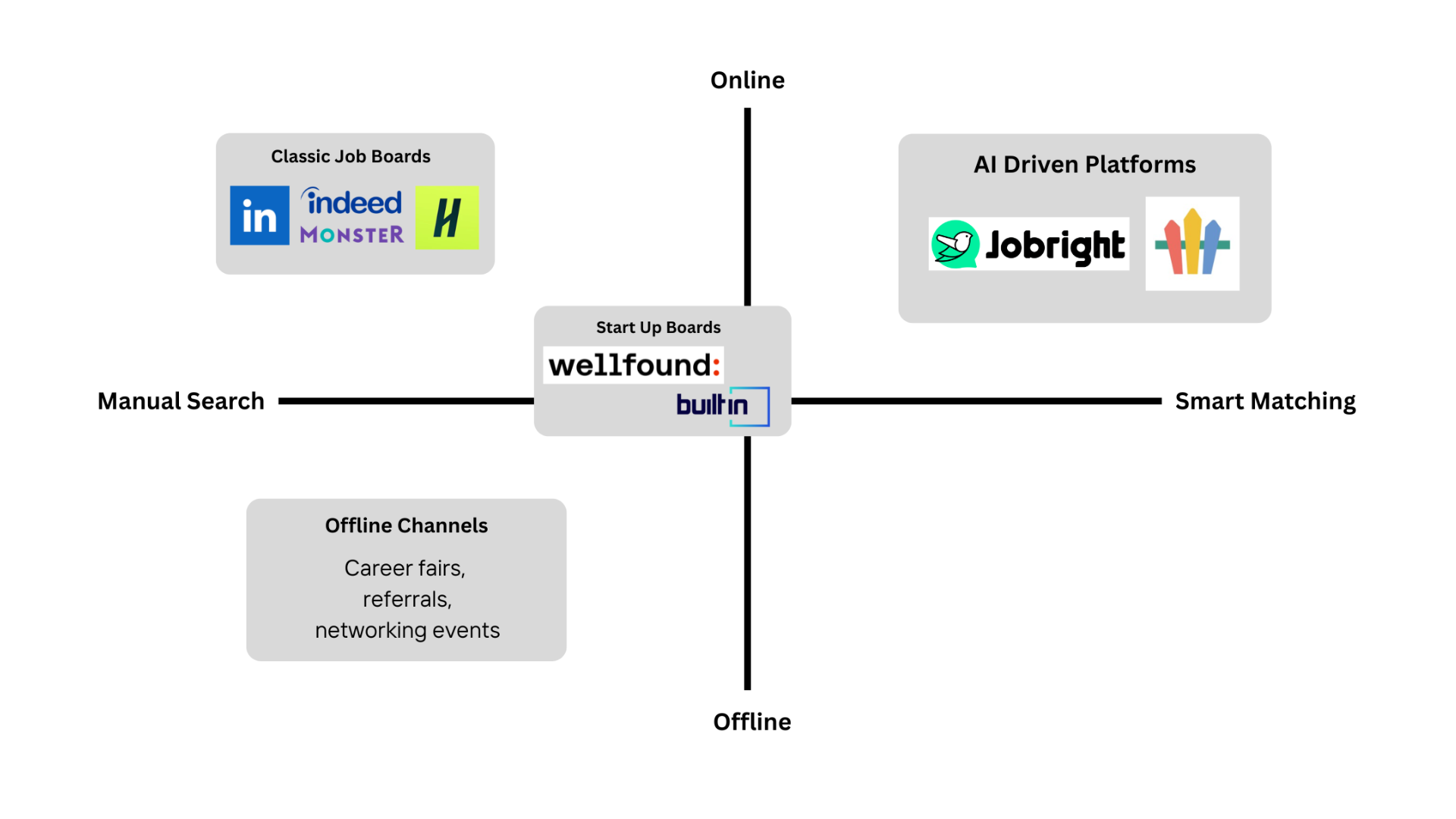
Classic Job Boards
Keyword-first, filter-heavy, manual matching
Startup Boards
Role-focused, early-stage exploration
AI-Driven Platforms
Tag-based, intent-focused, high context
Offline Channels
Personal trust, low discovery range
Hypothesis
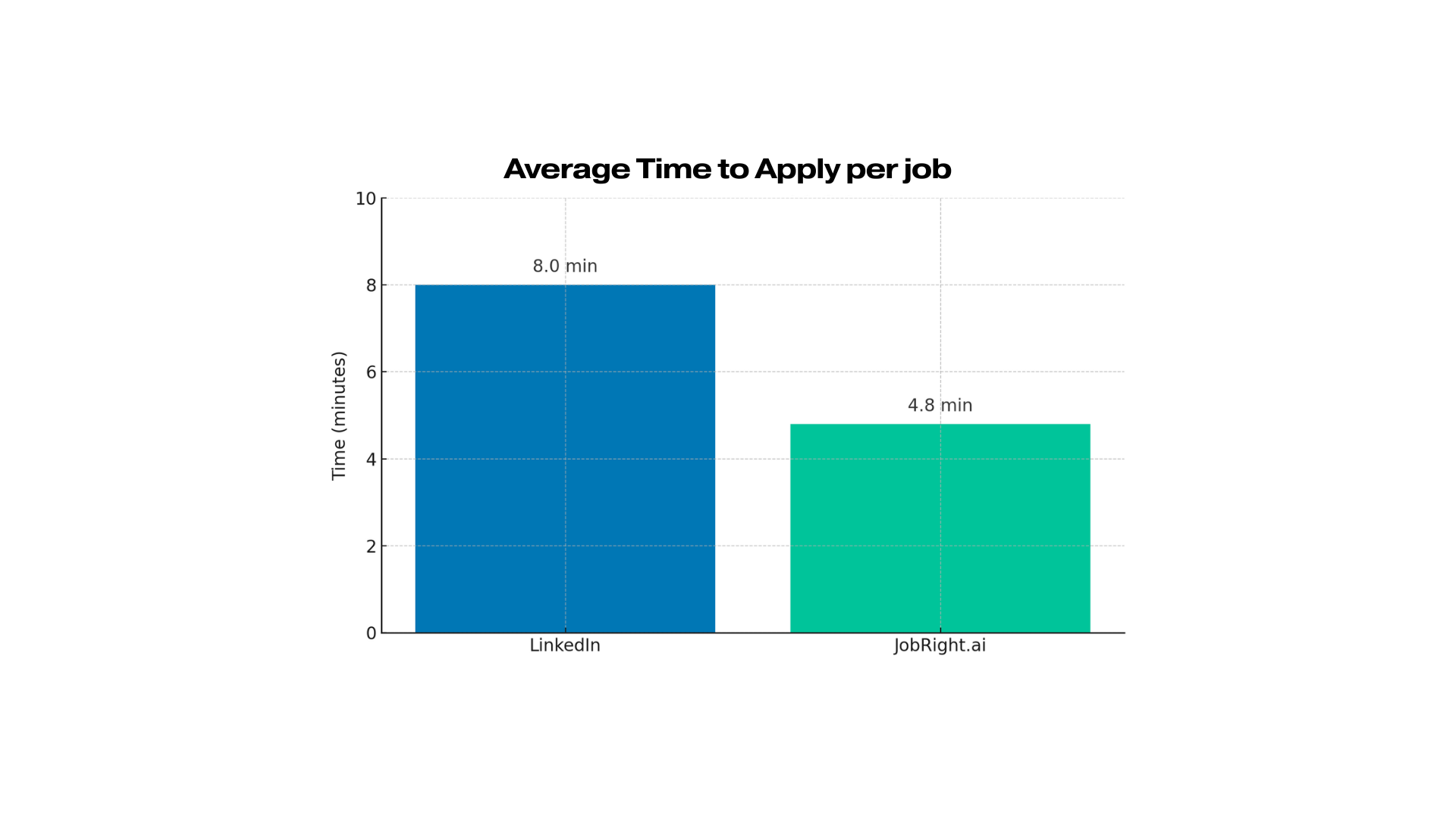
If LinkedIn search was powered by AI, users would spend less time searching and more time applying.
Market
What Are Job Seekers Really Asking For?
Most platforms, including LinkedIn, rely on keyword search and basic filters — fine for generic roles, but it breaks down when searches are more specific:
- Entry-level roles
- Visa sponsorship
- Hybrid work preference
- Roles without prior PM experience
The platform has the jobs. What it lacks is understanding. Users need:
- Accuracy
- Systems that understand intent
- Special filters (e.g., visa, entry-level)
- Faster search → Faster apply
Market Analysis
| Platform | Pricing | Smart Filters | Visa Tagging | Accuracy | Notes |
|---|---|---|---|---|---|
| Freemium/Paid | Medium | ❌ | Low | Best distribution, weakest AI | |
| Indeed | Free | Low | ❌ | Medium | Heavy recruiter focus |
| Glassdoor | Free | Low | ❌ | Low | Good salary data |
| Google Jobs | Free | Medium | ❌ | Medium | Powerful parsing, poor feedback |
| Wellfound (AngelList) | Free | Medium | ❌ | Medium | Great for early-stage roles |
| Jobright.ai | Free | High | ✅ | Accurate | Top-notch semantic AI |
| LibaSpace | Paid (Newsletter) | High | ✅ | Manual curation | Narrow audience |
Market Opportunity
User Pain Points
- Time-consuming searches
- Irrelevant job matches
- Complex filtering process
Market Gap
- Lack of AI-powered search
- Limited intent understanding
- Poor relevance matching
Solution Value
- Faster job discovery
- Better match accuracy
- Improved user experience
Audience

76% of LinkedIn users are under age 35.
Personas
- Students & early-career professionals
- Immigrant professionals (H1B, OPT)
- Career switchers
- Users seeking hybrid/remote roles
- Mobile-first, goal-driven users
User Needs
"They want less search, more confidence in fit."
Users are actively optimizing for visa/entry-level constraints and seeking roles that match their specific requirements.
User Insights
Pain Points
- Smarter search options
- Jobs tailored to user needs
- Increase number of applicable jobs
- Smart filters (visa, experience level, industry)
- AI-powered recommendations
Benefits
Hiring Managers
- Better applicants
- Right fit applicants
Job Seekers
- Faster applications
- More applications
Companies
- Faster hires
- Reach right people
Solutions
Comparison
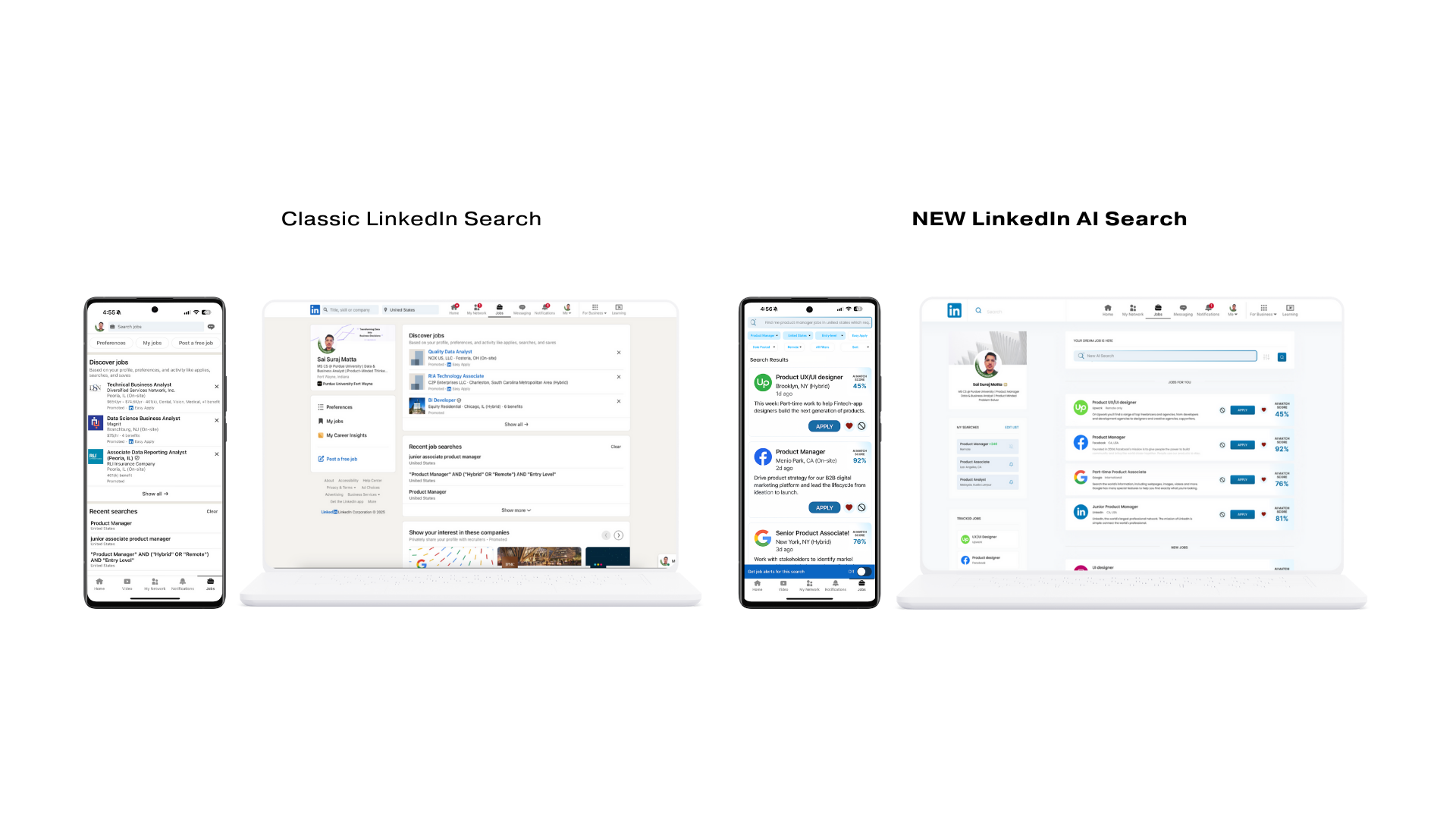
Classic LinkedIn Search
- Keyword and manual filters
- Manual scanning
New LinkedIn AI Search
- Intent-based smart filters
- Smart recommendations
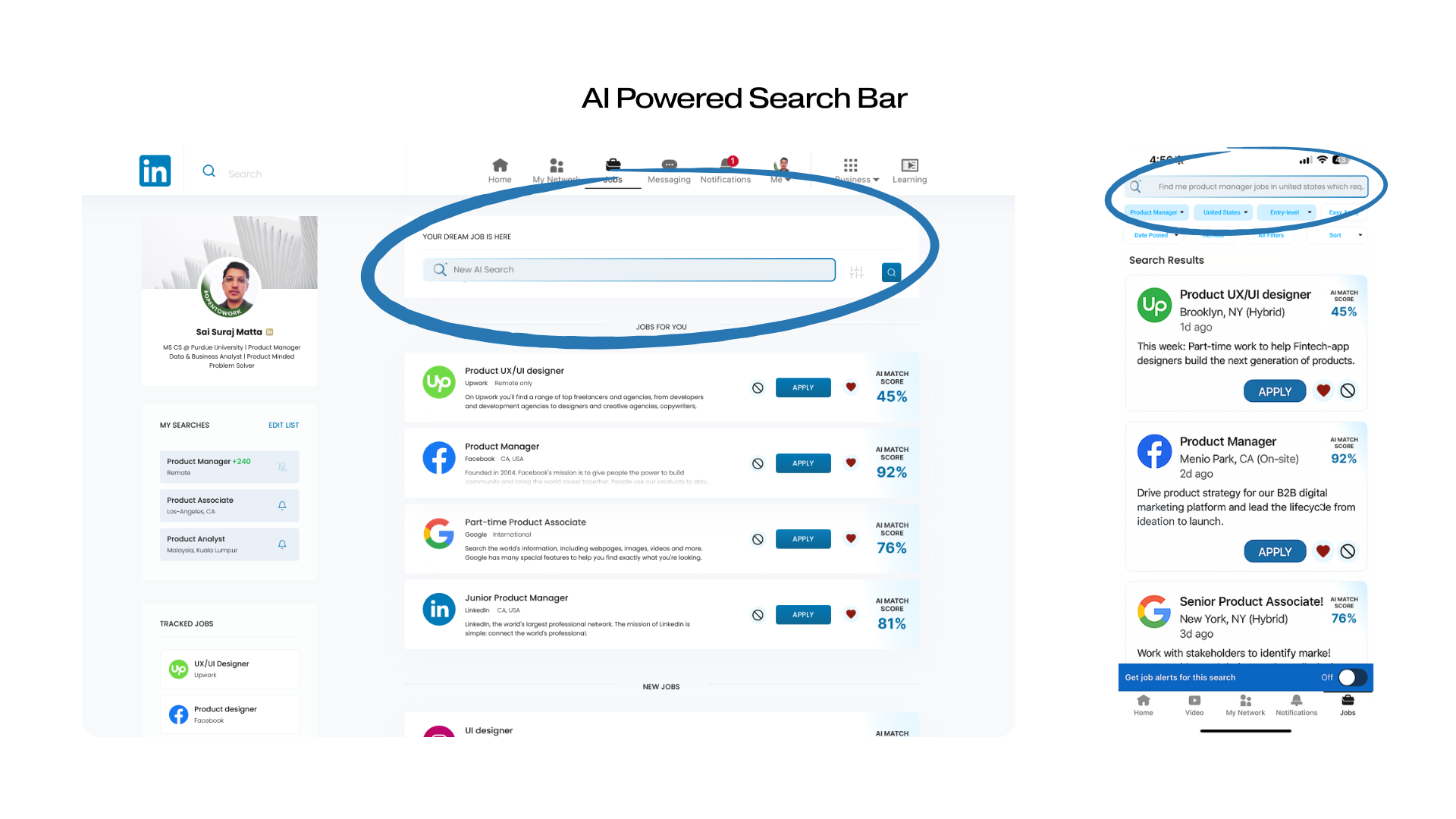
Feature #1: AI-Powered Search Bar
Users type natural language queries, AI interprets them.
Feature #2: Smart Filter Panel
Auto-generated filters based on intent.

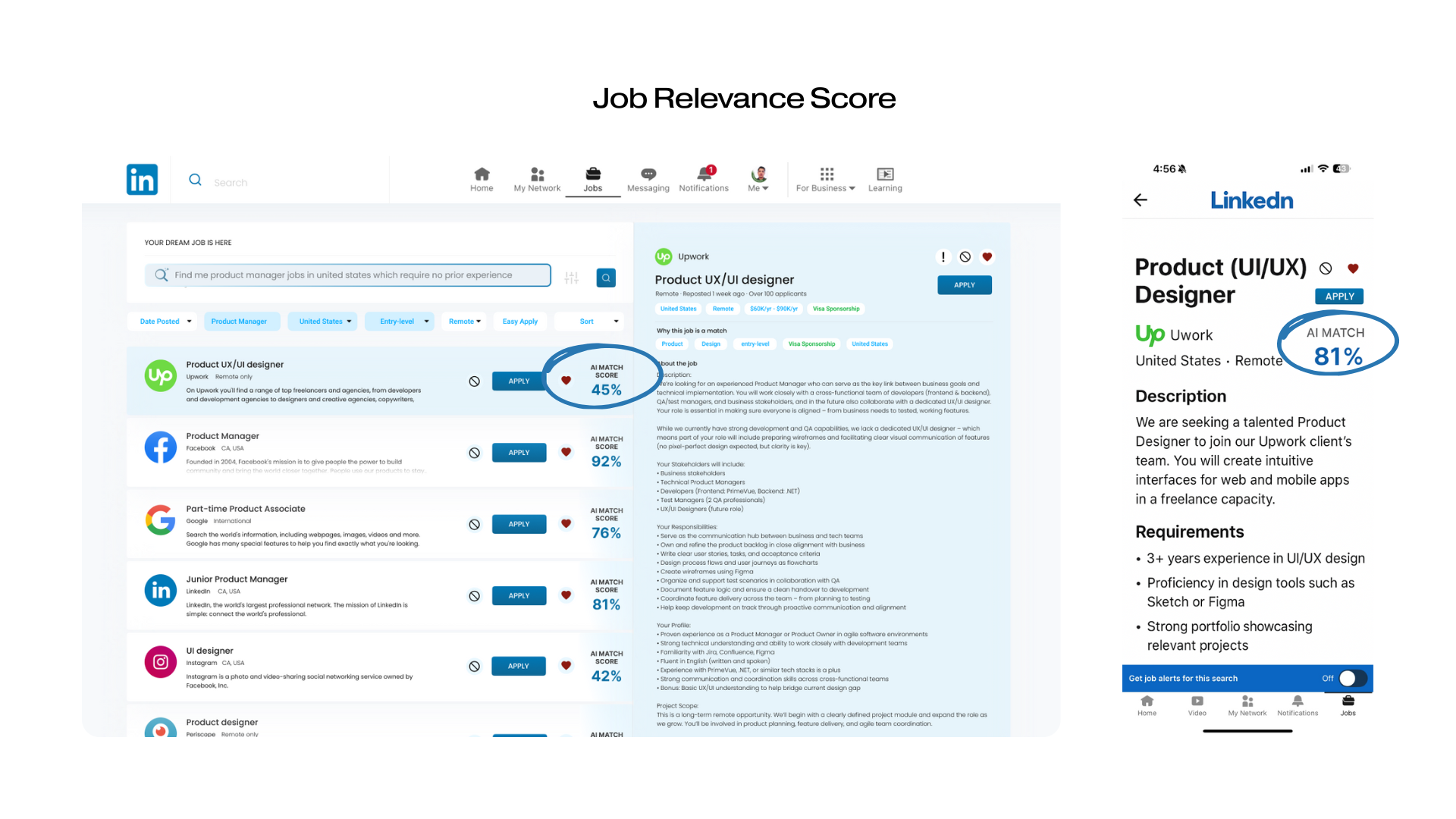
Feature #3: Job Relevance Score
Relevance % shown on each listing.
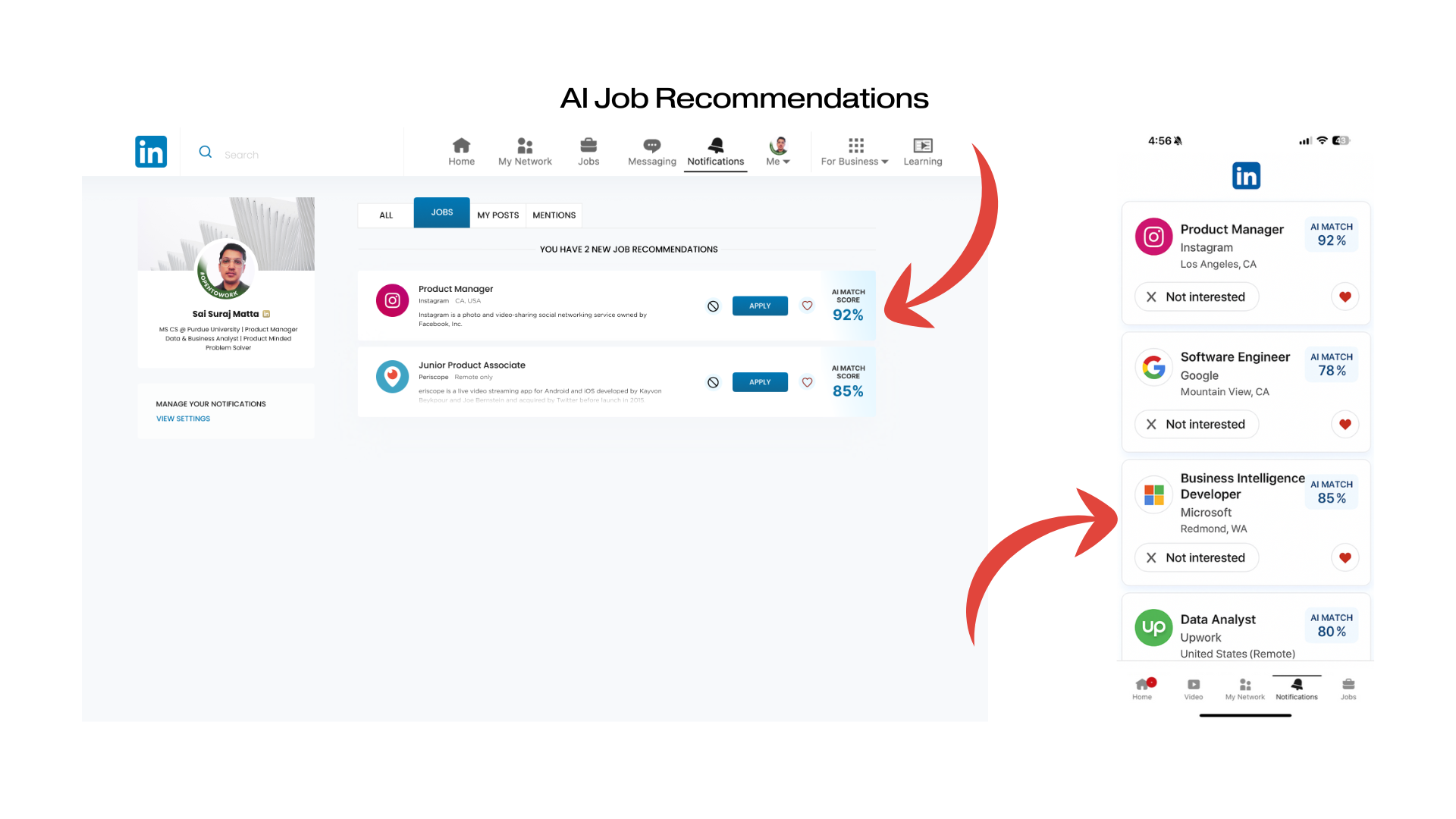
Feature #4: AI Job Recommendations
Daily recommended jobs tailored to user profiles.
Launch & GTM Strategy
Phased Rollout Approach
- Pilot Launch: Test Smart Search with a small group of LinkedIn Premium users in one U.S. city.
- Iterate and Refine: Improve based on tagging accuracy, user feedback, engagement metrics.
- Expand Access: Roll out to all U.S. Premium users, introduce resume-job matching tools.
- Global Rollout: Expand globally with multilingual and localized tagging support.
Rollout Plan:
Pilot
Iterate
Expand regionally
Go global
Measuring Success
North Star Metric
Jobs applied per session
Leading Indicators
- Smart search bar usage %
- Filter generation success rate
- Feedback submissions per session
Lagging Indicators
- Premium subscription conversion rate
- Reapply rate from alerts
- Recruiter resume views
Counter Metrics
- Bounce rate after search
- Tagging errors (false positives)
- Search time exceeding 15 minutes
Monitoring Metrics
AI inference latency
Tagging completion rate
User-flagged misaligned matches
Final Thoughts
This project started with frustration. I spent hours searching for jobs on LinkedIn — applying filters, scanning listings — only to find jobs that didn't match my experience, visa status, or career goals.
I realized: LinkedIn knows who we are but doesn't understand what we need. Smart Job Search isn't just a feature. It's a shift in how we treat opportunity. AI can close the gap between what users type and what they actually mean.
This case study is my vision for a better search experience — one that helps users apply faster, apply smarter, and feel seen.
I am always open to a chat. Let's build something that helps people land where they belong.
📧 Email: saisurajmvv@gmail.com
🔗 LinkedIn: linkedin.com/in/saisurajmatta